
Keyword Research and Mapping for Effective SEO Strategy
Keyword research and mapping are essential components of a successful SEO strategy. They help businesses understand what their target audience is searching for and ensure that each website page is optimized for the most relevant search terms. By combining keyword research with strategic keyword mapping, websites can improve their visibility, attract qualified traffic, and increase conversions.
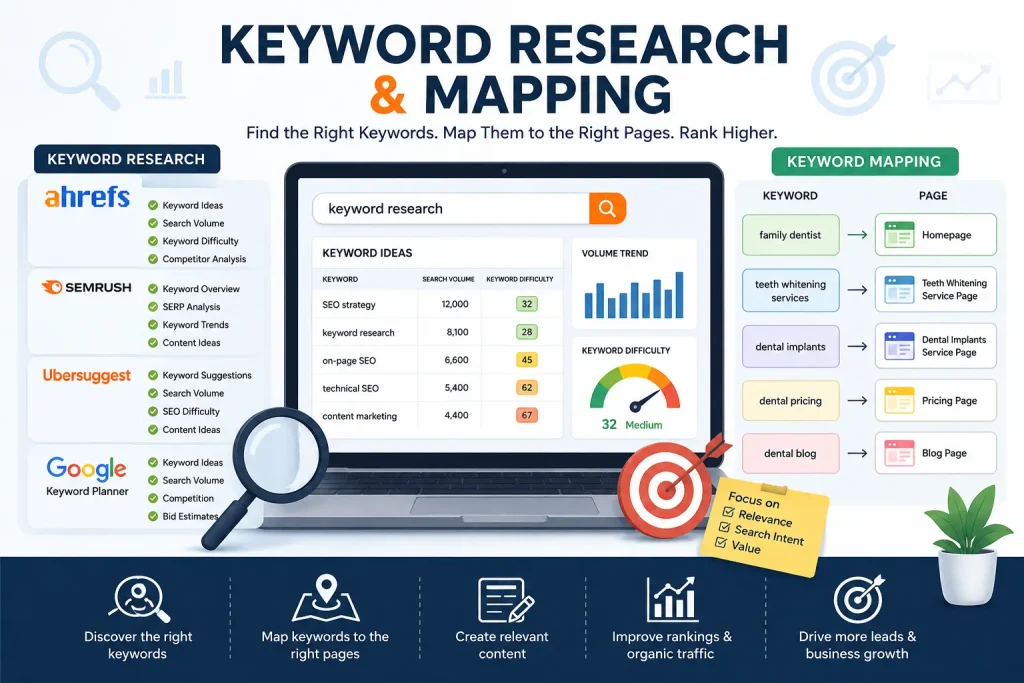
The first step in the process is keyword research. This involves identifying search terms that potential customers use when looking for products, services, or information online. Premium SEO tools such as Ahrefs, Semrush, and Ubersuggest provide valuable insights into keyword search volume, keyword difficulty, search intent, competitor rankings, and related keyword opportunities.
Ahrefs is widely recognized for its extensive keyword database and competitor analysis features. It helps uncover high-value keywords and reveals which terms competitors are ranking for. Semrush offers comprehensive keyword research capabilities, including keyword trends, SERP analysis, and content optimization recommendations. Ubersuggest is a user-friendly tool that provides keyword suggestions, search volume data, and SEO difficulty scores, making it useful for both beginners and experienced marketers.
For those working with limited budgets, Google Keyword Planner remains an excellent free alternative. It provides keyword ideas, estimated search volumes, and bidding data directly from Google. While primarily designed for Google Ads campaigns, it is also highly effective for SEO keyword research.
Once the keyword research phase is complete, the next step is keyword mapping. Keyword mapping involves assigning target keywords to specific pages on a website based on relevance and search intent. Each page should focus on one primary keyword and several supporting secondary keywords. This helps prevent keyword cannibalization, where multiple pages compete for the same search term, potentially harming rankings.
For example, a dental clinic website may target “family dentist” on its homepage, “teeth whitening services” on a dedicated service page, and “dental implants” on another specialized page. This structured approach ensures that each page serves a distinct purpose and aligns with user search intent.
Effective keyword mapping also guides content creation, metadata optimization, internal linking, and overall site architecture. By using data from Ahrefs, Semrush, Ubersuggest, and Google Keyword Planner, businesses can develop a clear SEO roadmap that supports sustainable organic growth.
A well-executed keyword research and mapping strategy lays the foundation for higher search rankings, increased website traffic, and improved online visibility in competitive search results.